

Depression and Health Equity
Health Equity and Social Determinants of Health
Depression and Health Equity
Sandi Tenfelde, PhD
Dr. Tenfelde: I am first and foremost a nurse and a clinician. I’m a women’s health nurse practitioner, and my current clinical job is as a women’s health nurse practitioner in a federally qualified health center (FQHC) in the City of Chicago. I see patients one day a week, and it makes me a better teacher and a better scientist because I’m very grounded clinically in the projects and in the questions that I ask as a researcher. I have been doing secondary data analysis using electronic health data for the last few projects that I’ve been working on, trying to understand from a clinical perspective the kind of care that we’re providing the patients who might be falling through the cracks and what we can do potentially to alter the care that we deliver in order to help our patients have healthier lives.
This is the data that I’m then able to analyze to try to understand where we might be struggling. My current project that I’m working on has a data set of 50,000 patients from their very first prenatal visit through their first-year post birth visit. Currently, I am looking at how we are doing perinatal depression screening. Maternal mental health has been a very important part of the work that I do as a clinician. I’m also a certified yoga instructor so I talk to all of my patients about mental health and how our mind and our body and our spirit are connected. And I recognize that many of our patients that we work with in the community health center are struggling right now.
Why is this topic important?
If we don’t address our mental health needs, it’s really hard for us to be as healthy as we can be in our physical bodies. I have been talking with all of my patients about mental health and asking how they handle stress, knowing well that my patients experience many of the social determinants of health that make it harder for them to be as healthy as possible in terms of lack of resources.
Many of my patients are living in poverty. Many of my patients have been exposed to violence. Many of my patients have a very traumatic life, and they are trying to manage all of that in addition to keeping their weight and their blood pressure, contraception/family planning, and health conditions like diabetes in control. So I talk to everybody about mental health.
Talar Markossian, PhD
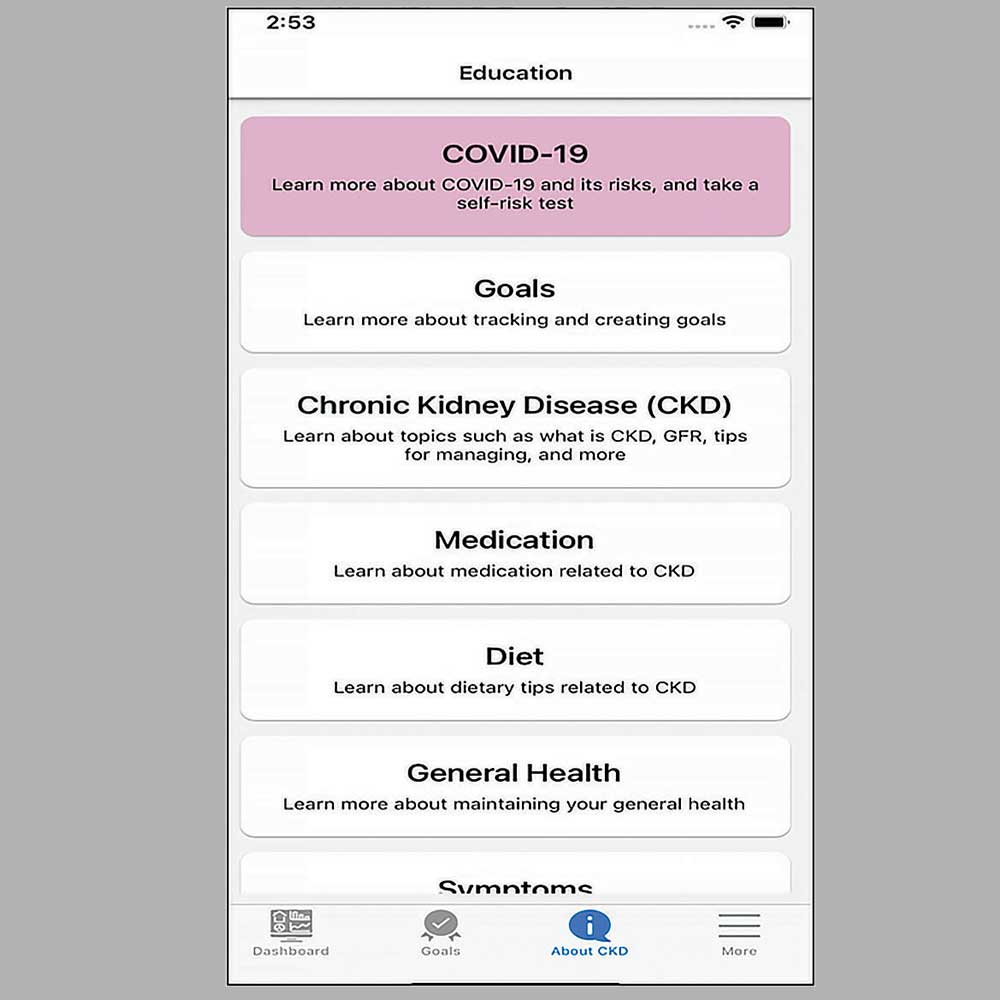
Chronic Kidney Disease Mobile App
Disease and Clinical Syndrome Prevention
App supports CKD self-management and patient communication
Learn More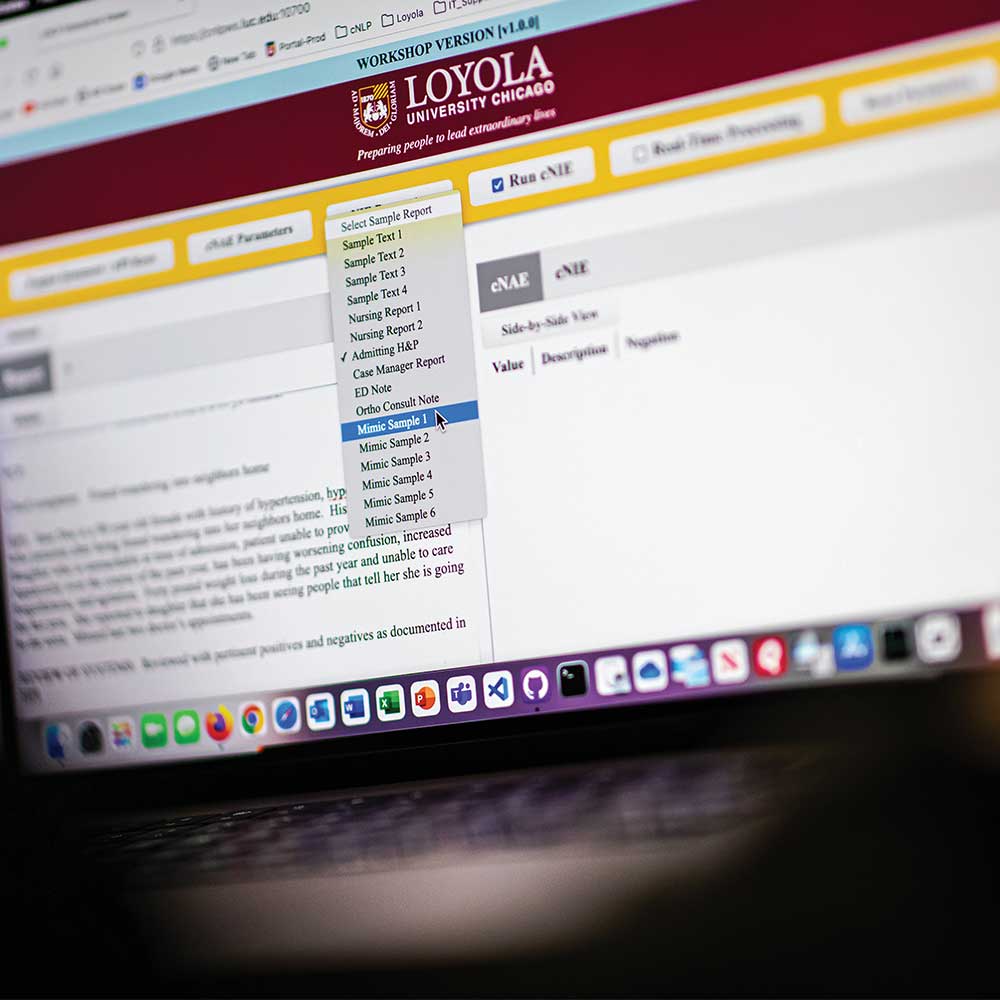
Kim Oosterhouse, PhD
Delirium Phenotypes
Disease and Clinical Syndrome Prevention
Using AI to detect delirium in elders
Learn More
Patricia “Trish” Sheean, PhD
Body Composition, Nutrition and COVID
Lifestyle Factors and Health
ICU study links COVID outcomes to illness severity
Learn MoreThe Federally Qualified Health Center where I work is a patient-centered medical home. It’s a model that proposes that all of the healthcare needs that an individual may have can be met underneath the roof of an organization. We have nine community health centers across the city of Chicago. So on paper, we have internal medicine, we have pediatrics, we have reproductive health. Where I work, we have a pharmacy and we have WIC (women, infants and children). We have early intervention for patients that are HIV-positive. We have a podiatrist, we have dentists, and “on paper” we have behavioral health. So we have a referral system in place to refer our patients to talk with social workers, psychologists, psychiatrists who can then further address their mental health needs beyond what I do in primary care.
I’m not a trained therapist. There’s a limit to what I do as a clinician in primary care that my colleagues in psychiatry, psychology, and social work do better than I can. However, it’s a really hard job and a lot of our clinicians have come and gone. Over the years, our behavioral health team has really been decimated. And COVID was especially damaging for behavioral health. There were so many other needs; our clinicians could leave our very challenging center and work in telehealth visits and do other Marcella Niehoff Reading Room on Loyola’s Health Sciences Campus. screening tools and quantifying how severe their mental health issues are. So our students are going to be trained in this. Our students have been trained on how to have effective communication and how to provide compassionate care for our patients, especially in a telehealth framework. They will be rescreening them for both depression and anxiety. Then, they’ll also be doing a measure looking at social determinants of health to understand what are the other issues that make it harder for patients to get the healthcare they need. Patients who are still seeking behavioral health have now been triaged back into the system and referred to clinicians who can meet their needs. Loyola undergraduate nursing students made this happen, through the efforts of the grant team and dedicated community health faculty. things. And we have not had the resources in place. This was unbeknownst to me as a clinician who is still on the front line and still putting in these referrals for my patients.
There has been a backlog of patients on a behavioral health list, and I did not realize the extent to which this was a problem until we hired a new psychiatrist last year in our clinic. I was informed that we have a large number of people on this list that have been referred by frontline clinicians like me. I had my patients come back to me and they’re like, “Sandi, you told me that somebody would call me and nobody’s called me”. And then I feel like it’s further eroding the trust that our community has in the services that we say that we’re able to provide. So I wrote an application for a grant with the help of some of my colleagues within the School of Nursing, the School of Medicine, and in the Center for Urban Research and Learning (CURL) to see if we could build a community partnership between Loyola and Near North FQHC to address the behavioral health needs of our patients. The main thrust of what we are doing is bringing in undergraduate students who are in their community health rotation in the School of Nursing to learn community health and see what we do in “ this community health center. So they’re going to be able to shadow the nursing staff in the clinic. And they are providing outreach to the patients who are seeking behavioral health referrals. It’s always a struggle.
Man of my patients have a very traumatic life, and they are trying to manage all of that in addition to keeping their weight and their blood pressure, contraception, family planning and diabetes in control. Dr. Sandi Tenfelde
I wear multiple hats here. I’m a clinician, I’m faculty and I’m a researcher. So I’m thinking through all of these lenses simultaneously. But it’s always really challenging to find really good experiences for our students to see what healthcare actually looks like. You know, we can talk about it from a classroom setting, but actually getting their boots on the ground is really challenging. Our undergraduate students will be able to see community health in action. They’ll be able to shadow the community health nurses and the nursing staff that are in this clinic to see what this looks like. But then they’re also going to be working on the backlog of behavioral health patients. They will conduct telehealth visits with the patients that are on this list, and essentially ask them, did you get better? Did you get worse? Did you stay the same? Do you still want services? And then they’ll be able to do the proper screening, the validated measures for behavioral health, which as a clinician in my 15-minute visit, I’m not doing the full screening tools and quantifying how severe their mental health issues are. So our students are going to be trained in this.
Our students have been trained on how to have effective communication and how to provide compassionate care for our patients, especially in a telehealth framework. They will be rescreening them for both depression and anxiety. Then, they’ll also be doing a measure looking at social determinants of health to understand what are the other issues that make it harder for patients to get the healthcare they need. Patients who are still seeking behavioral health have now been triaged back into the system and referred to clinicians who can meet their needs. Loyola undergraduate nursing students made this happen, through the efforts of the grant team and dedicated community health faculty.
Sandi Tenfelde, PhD
Dr. Tenfelde: I am first and foremost a nurse and a clinician. I’m a women’s health nurse practitioner, and my current clinical job is as a women’s health nurse practitioner in a federally qualified health center (FQHC) in the City of Chicago. I see patients one day a week, and it makes me a better teacher and a better scientist because I’m very grounded clinically in the projects and in the questions that I ask as a researcher. I have been doing secondary data analysis using electronic health data for the last few projects that I’ve been working on, trying to understand from a clinical perspective the kind of care that we’re providing the patients who might be falling through the cracks and what we can do potentially to alter the care that we deliver in order to help our patients have healthier lives.
This is the data that I’m then able to analyze to try to understand where we might be struggling. My current project that I’m working on has a data set of 50,000 patients from their very first prenatal visit through their first-year post birth visit. Currently, I am looking at how we are doing perinatal depression screening. Maternal mental health has been a very important part of the work that I do as a clinician. I’m also a certified yoga instructor so I talk to all of my patients about mental health and how our mind and our body and our spirit are connected. And I recognize that many of our patients that we work with in the community health center are struggling right now.
Why is this topic important?
If we don’t address our mental health needs, it’s really hard for us to be as healthy as we can be in our physical bodies. I have been talking with all of my patients about mental health and asking how they handle stress, knowing well that my patients experience many of the social determinants of health that make it harder for them to be as healthy as possible in terms of lack of resources.
Many of my patients are living in poverty. Many of my patients have been exposed to violence. Many of my patients have a very traumatic life, and they are trying to manage all of that in addition to keeping their weight and their blood pressure, contraception/family planning, and health conditions like diabetes in control. So I talk to everybody about mental health.
The Federally Qualified Health Center where I work is a patient-centered medical home. It’s a model that proposes that all of the healthcare needs that an individual may have can be met underneath the roof of an organization. We have nine community health centers across the city of Chicago. So on paper, we have internal medicine, we have pediatrics, we have reproductive health. Where I work, we have a pharmacy and we have WIC (women, infants and children). We have early intervention for patients that are HIV-positive. We have a podiatrist, we have dentists, and “on paper” we have behavioral health. So we have a referral system in place to refer our patients to talk with social workers, psychologists, psychiatrists who can then further address their mental health needs beyond what I do in primary care.
I’m not a trained therapist. There’s a limit to what I do as a clinician in primary care that my colleagues in psychiatry, psychology, and social work do better than I can. However, it’s a really hard job and a lot of our clinicians have come and gone. Over the years, our behavioral health team has really been decimated. And COVID was especially damaging for behavioral health. There were so many other needs; our clinicians could leave our very challenging center and work in telehealth visits and do other Marcella Niehoff Reading Room on Loyola’s Health Sciences Campus. screening tools and quantifying how severe their mental health issues are. So our students are going to be trained in this. Our students have been trained on how to have effective communication and how to provide compassionate care for our patients, especially in a telehealth framework. They will be rescreening them for both depression and anxiety. Then, they’ll also be doing a measure looking at social determinants of health to understand what are the other issues that make it harder for patients to get the healthcare they need. Patients who are still seeking behavioral health have now been triaged back into the system and referred to clinicians who can meet their needs. Loyola undergraduate nursing students made this happen, through the efforts of the grant team and dedicated community health faculty. things. And we have not had the resources in place. This was unbeknownst to me as a clinician who is still on the front line and still putting in these referrals for my patients.
There has been a backlog of patients on a behavioral health list, and I did not realize the extent to which this was a problem until we hired a new psychiatrist last year in our clinic. I was informed that we have a large number of people on this list that have been referred by frontline clinicians like me. I had my patients come back to me and they’re like, “Sandi, you told me that somebody would call me and nobody’s called me”. And then I feel like it’s further eroding the trust that our community has in the services that we say that we’re able to provide. So I wrote an application for a grant with the help of some of my colleagues within the School of Nursing, the School of Medicine, and in the Center for Urban Research and Learning (CURL) to see if we could build a community partnership between Loyola and Near North FQHC to address the behavioral health needs of our patients. The main thrust of what we are doing is bringing in undergraduate students who are in their community health rotation in the School of Nursing to learn community health and see what we do in “ this community health center. So they’re going to be able to shadow the nursing staff in the clinic. And they are providing outreach to the patients who are seeking behavioral health referrals. It’s always a struggle.
I wear multiple hats here. I’m a clinician, I’m faculty and I’m a researcher. So I’m thinking through all of these lenses simultaneously. But it’s always really challenging to find really good experiences for our students to see what healthcare actually looks like. You know, we can talk about it from a classroom setting, but actually getting their boots on the ground is really challenging. Our undergraduate students will be able to see community health in action. They’ll be able to shadow the community health nurses and the nursing staff that are in this clinic to see what this looks like. But then they’re also going to be working on the backlog of behavioral health patients. They will conduct telehealth visits with the patients that are on this list, and essentially ask them, did you get better? Did you get worse? Did you stay the same? Do you still want services? And then they’ll be able to do the proper screening, the validated measures for behavioral health, which as a clinician in my 15-minute visit, I’m not doing the full screening tools and quantifying how severe their mental health issues are. So our students are going to be trained in this.
Our students have been trained on how to have effective communication and how to provide compassionate care for our patients, especially in a telehealth framework. They will be rescreening them for both depression and anxiety. Then, they’ll also be doing a measure looking at social determinants of health to understand what are the other issues that make it harder for patients to get the healthcare they need. Patients who are still seeking behavioral health have now been triaged back into the system and referred to clinicians who can meet their needs. Loyola undergraduate nursing students made this happen, through the efforts of the grant team and dedicated community health faculty.